
When searching within digital information environments, two approaches can be distinguished:
Exploratory Search
Users navigate digital information spaces without necessarily seeking to answer a specific question or pursue a defined goal. As they move through these information environments, they may make unexpected and surprising discoveries. Their approach is critical, creative, and playful.
Users who follow this methodology can be described as »Information Flâneurs«.
Studies show that faceted search leads to higher levels of user satisfaction and helps users navigate unfamiliar information spaces. Users place greater trust in the information source and are better able to recall both the search process and the resulting outcomes. The selection of facets offered is a crucial factor in the exploration process.
Focused search
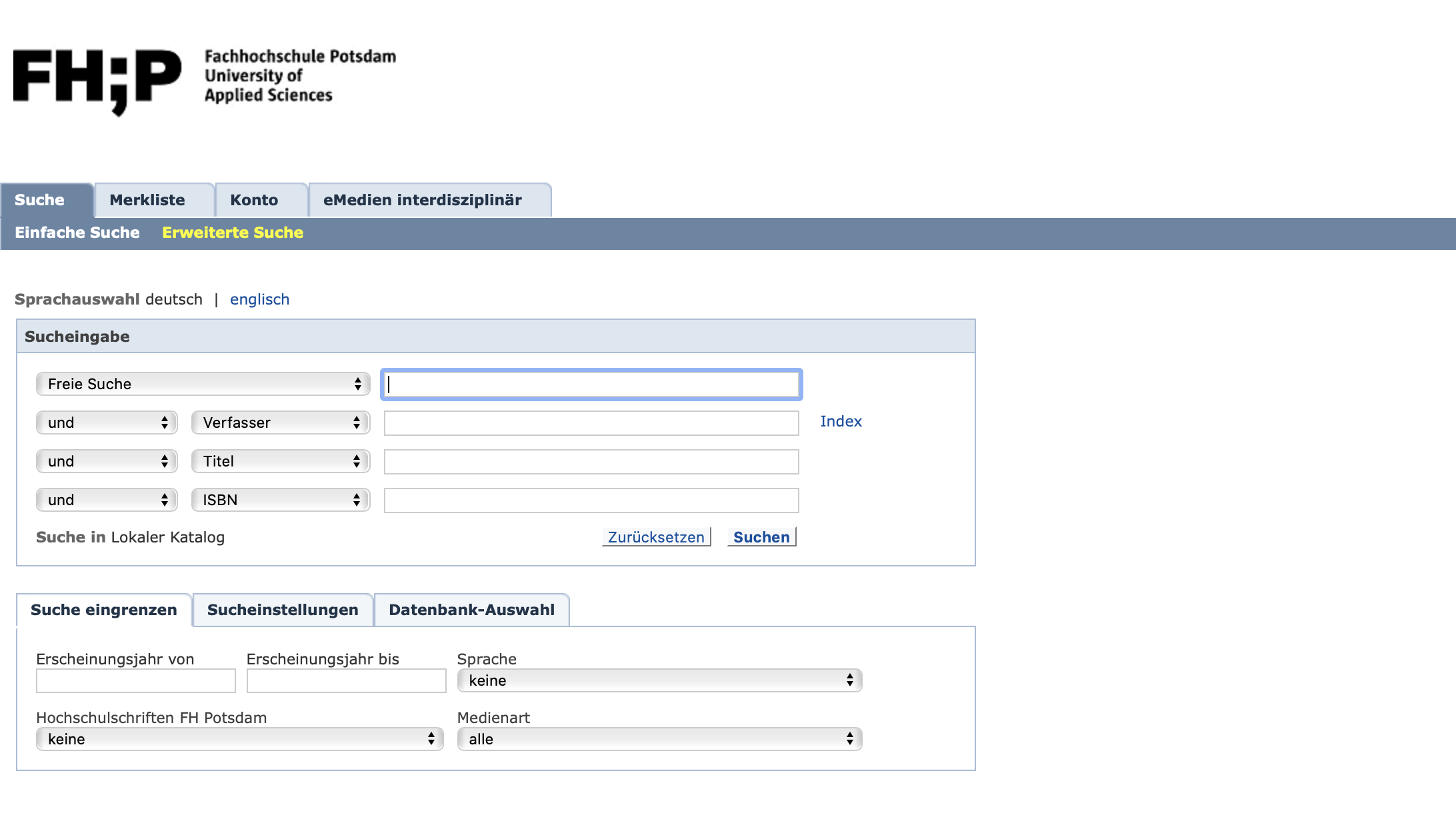
With this method, users take a targeted approach, searching for specific information. By using a database query — in the form of entering keywords — they aim to reach that information directly.
Target groups
Both methods can be used by the same individual, depending on their needs. While this work is intended to facilitate targeted searches, it is primarily aimed at users who are not looking for a specific work, but rather wish to explore the library’s collection. The target audience includes students and staff at the University of Applied Sciences Potsdam, prospective students, and individuals with an interest in academic literature and an affinity for digital media.
Based on user surveys and interviews with library scientists, the following design goals were developed:
layout and hierarchy
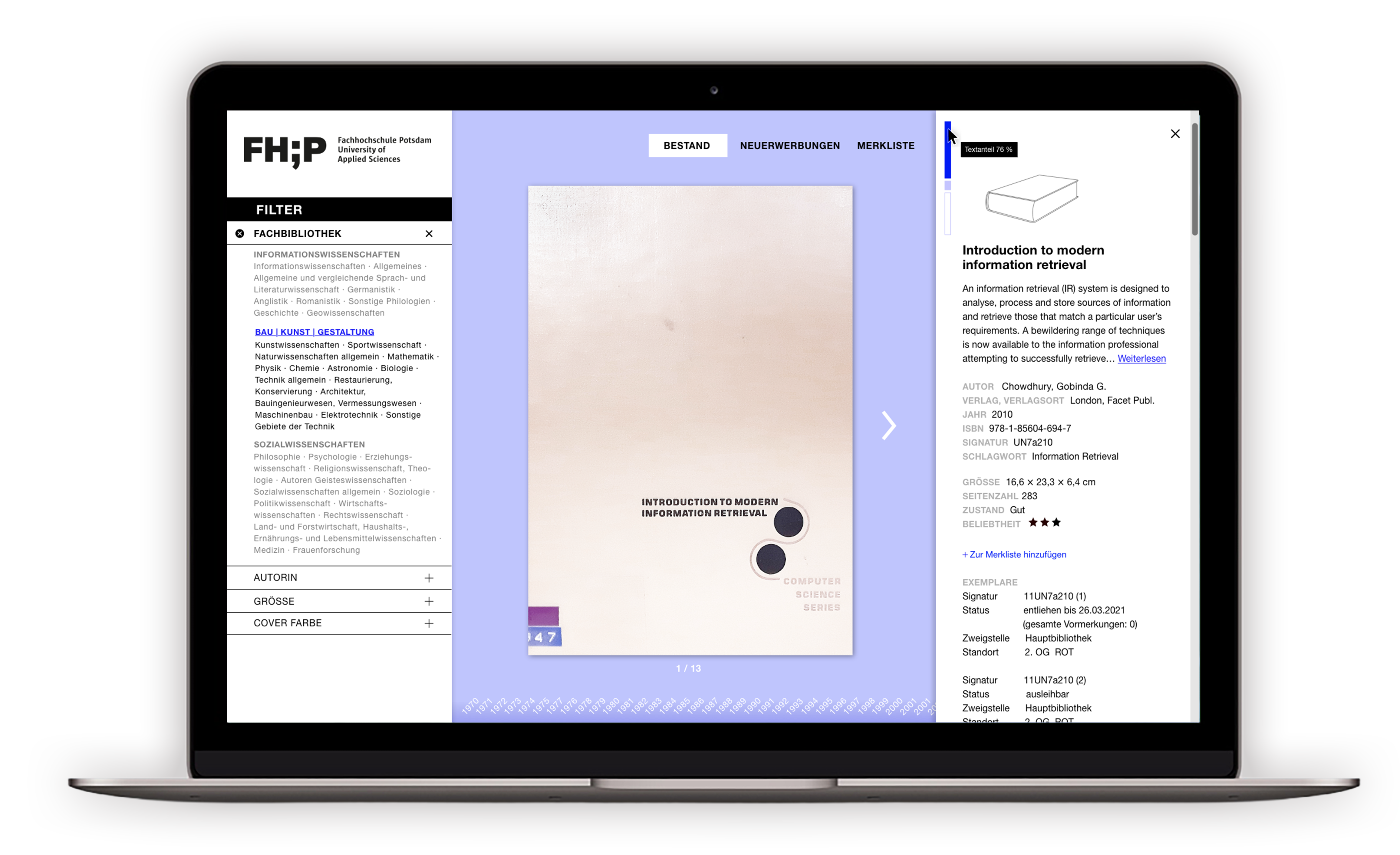
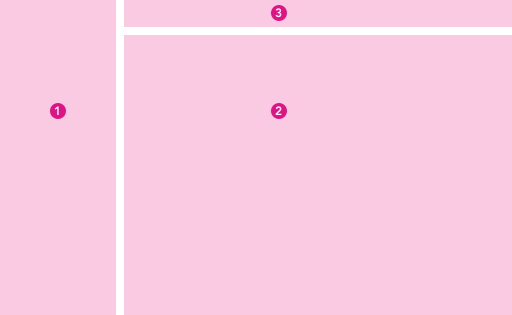
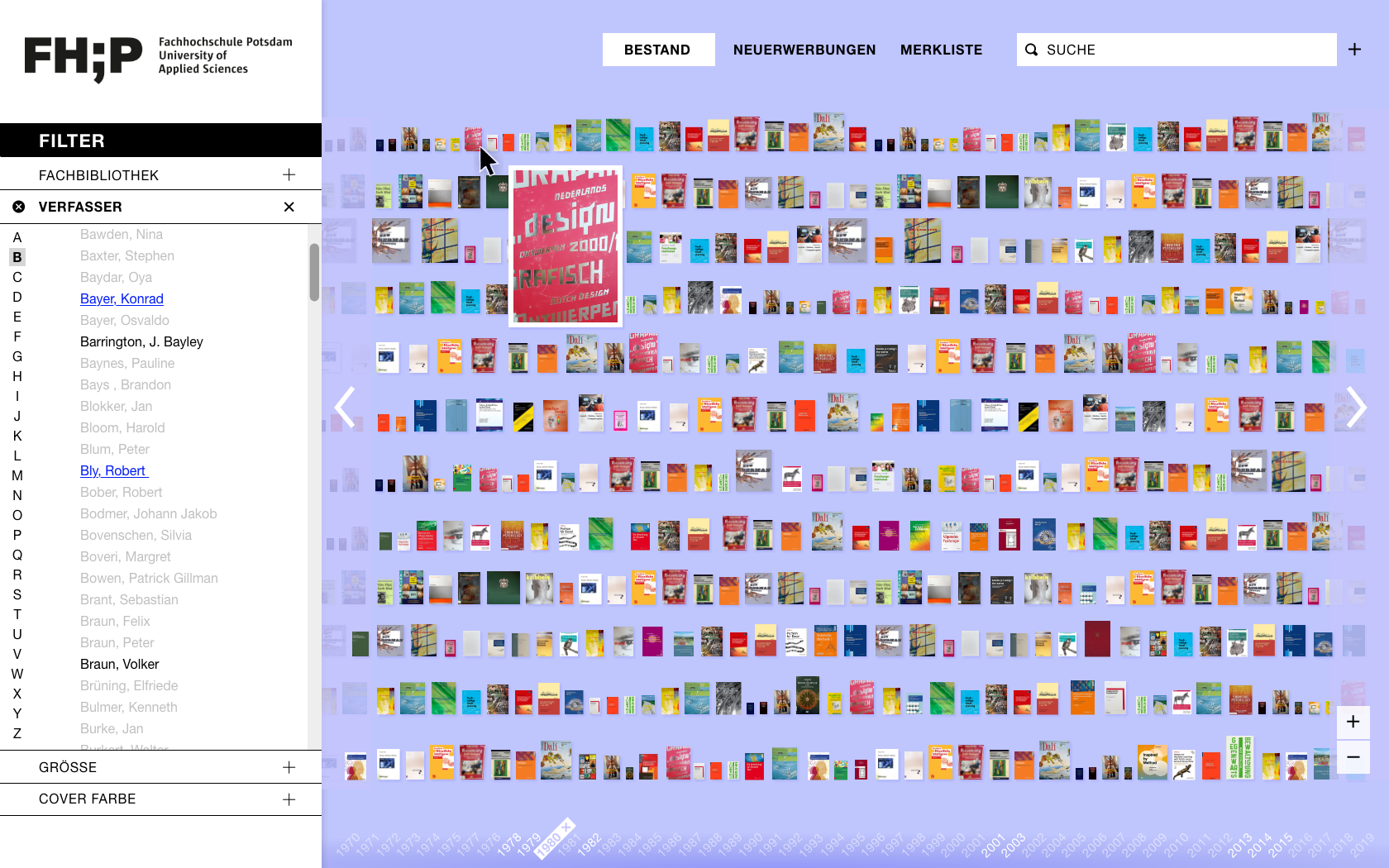
The basic layout consists of a fixed sidebar (1), a main area (2), and a navigation bar (3). The filtering tools are located within the sidebar. The main area occupies the largest portion of the space, as it holds the highest priority due to the visual presentation of the library's holdings. The navigation bar offers a selection of menu items as well as a search input field, allowing users to search for literature in a targeted manner. Advanced search options can be accessed via the plus sign. Thus, the design primarily supports exploratory search while also enabling targeted queries.
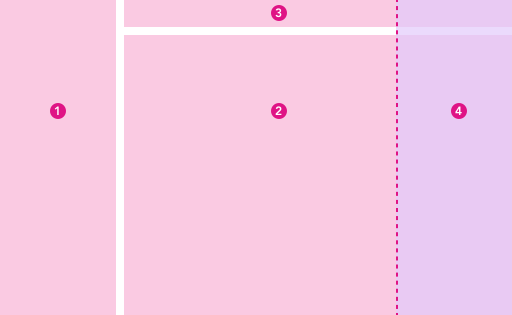
overlay sidebar
A sidebar (4) on the right of the screen contains detailed information about the selected work. It opens by clicking on a book from the main area. An animated overlay draws the user's attention to it. This gives the sidebar prioritization.
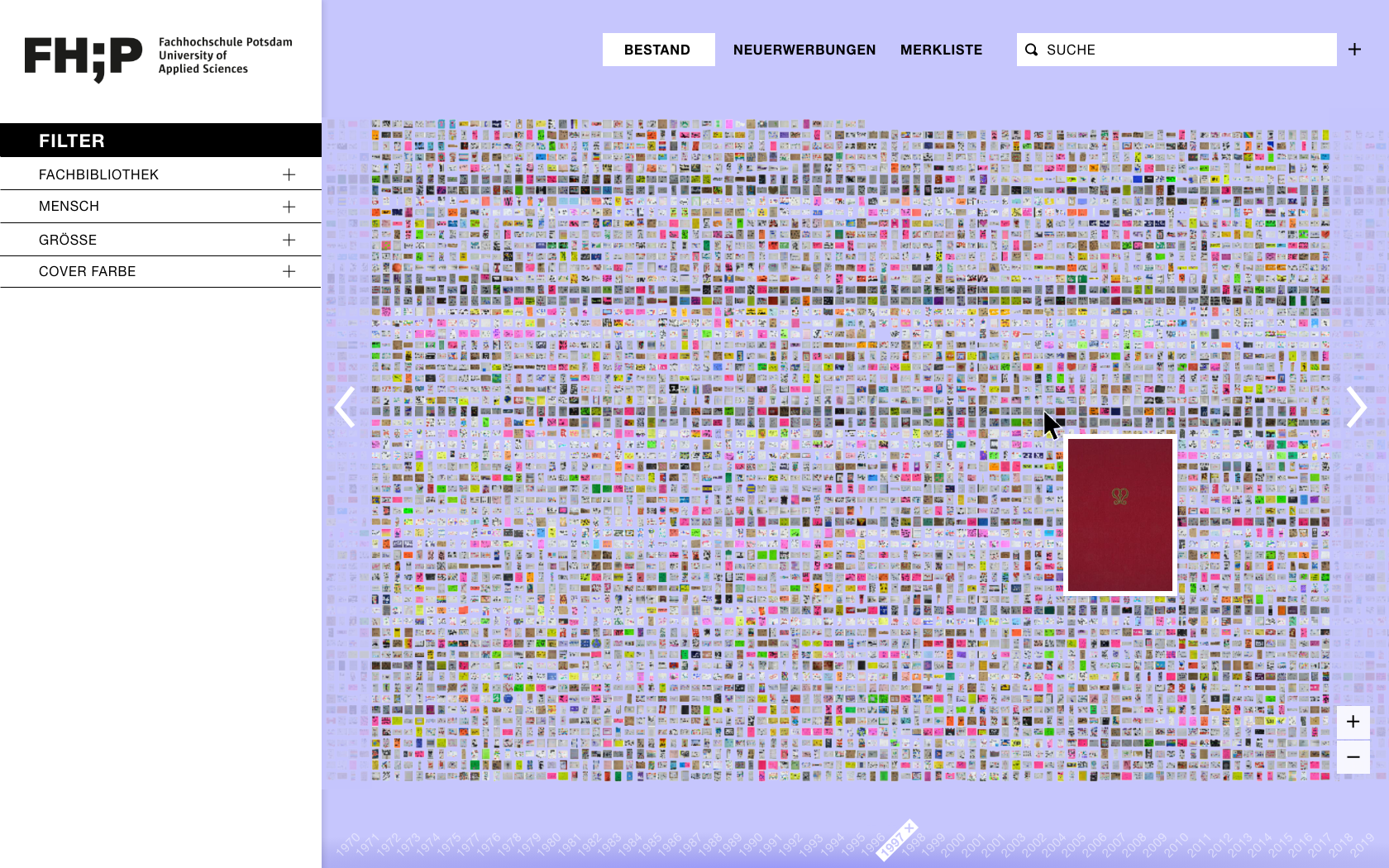
Scalable Overview
Upon opening the website, the collection is presented from a macro perspective, with books displayed as thumbnails. This overview is intended to convey the scale of the collection and facilitate a comprehensive, high-level interaction with it. In the absence of any applied filters, the arrangement of individual items is determined by a programmed randomization process, which generates a new layout each time the page is accessed. Users can navigate through the entire collection using the provided arrow elements. The view can be zoomed by scrolling or by using the dedicated control elements located along the right edge of the screen. The dimensions (width and height) of each book are translated into the digital space through a scale-accurate representation of its cover, making relative sizes immediately apparent. This creates a visual connection to the physical copy, allowing it to be identified more quickly when searching within the analog library.
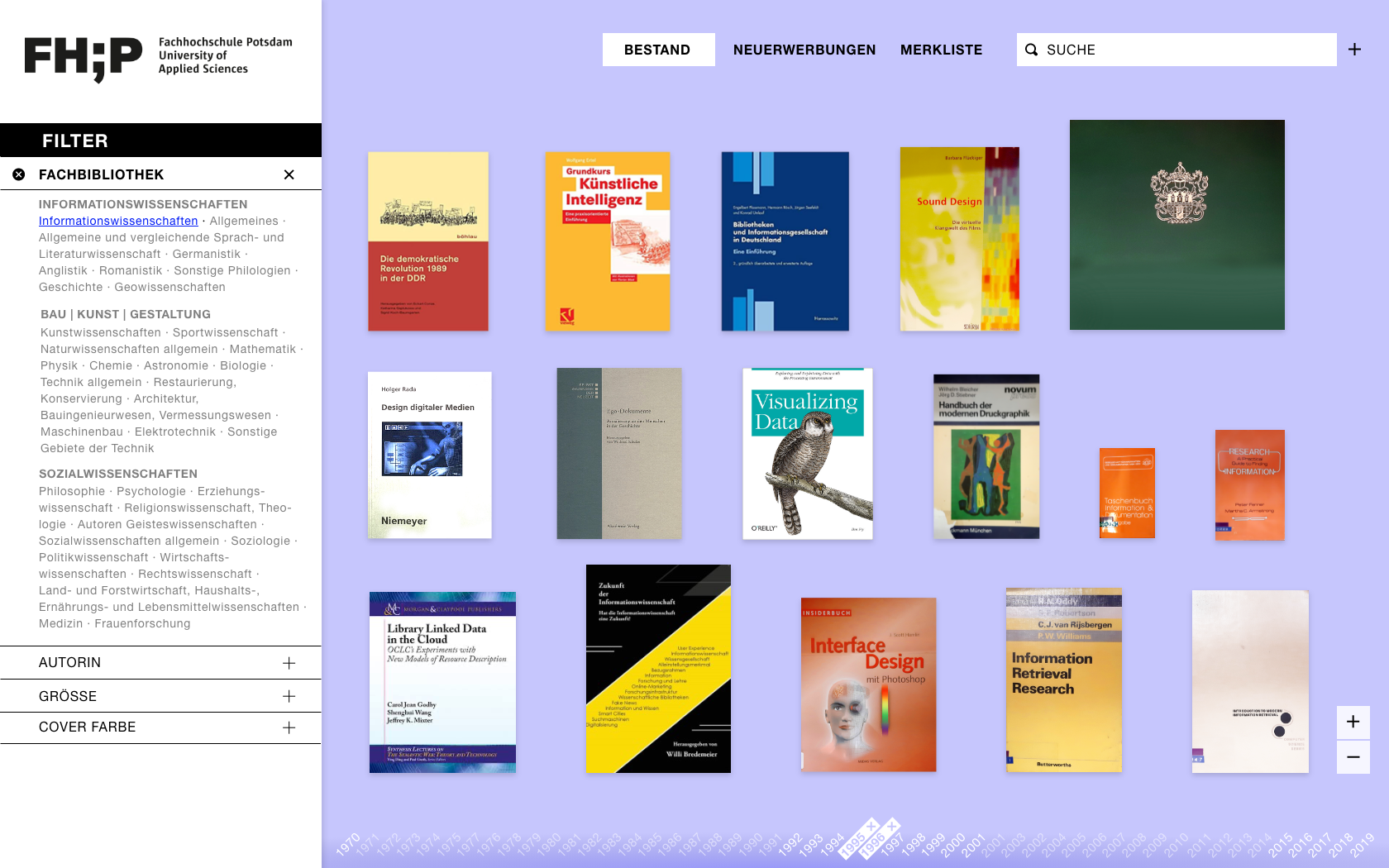
Faceted search
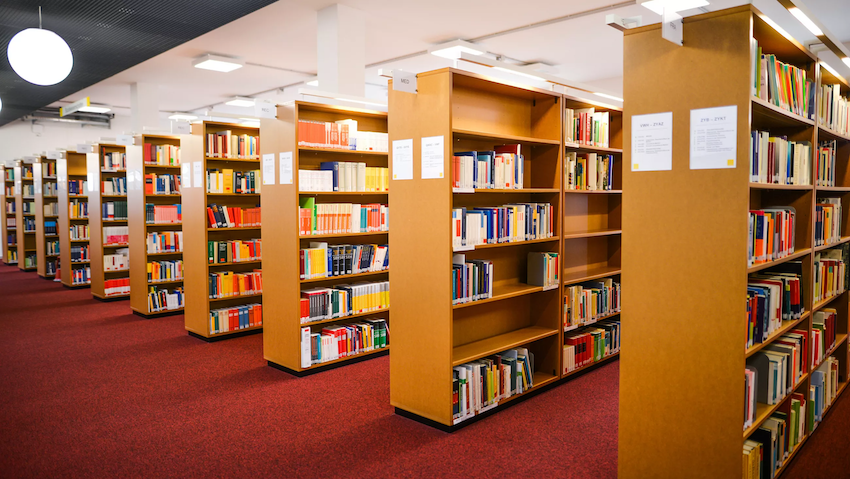
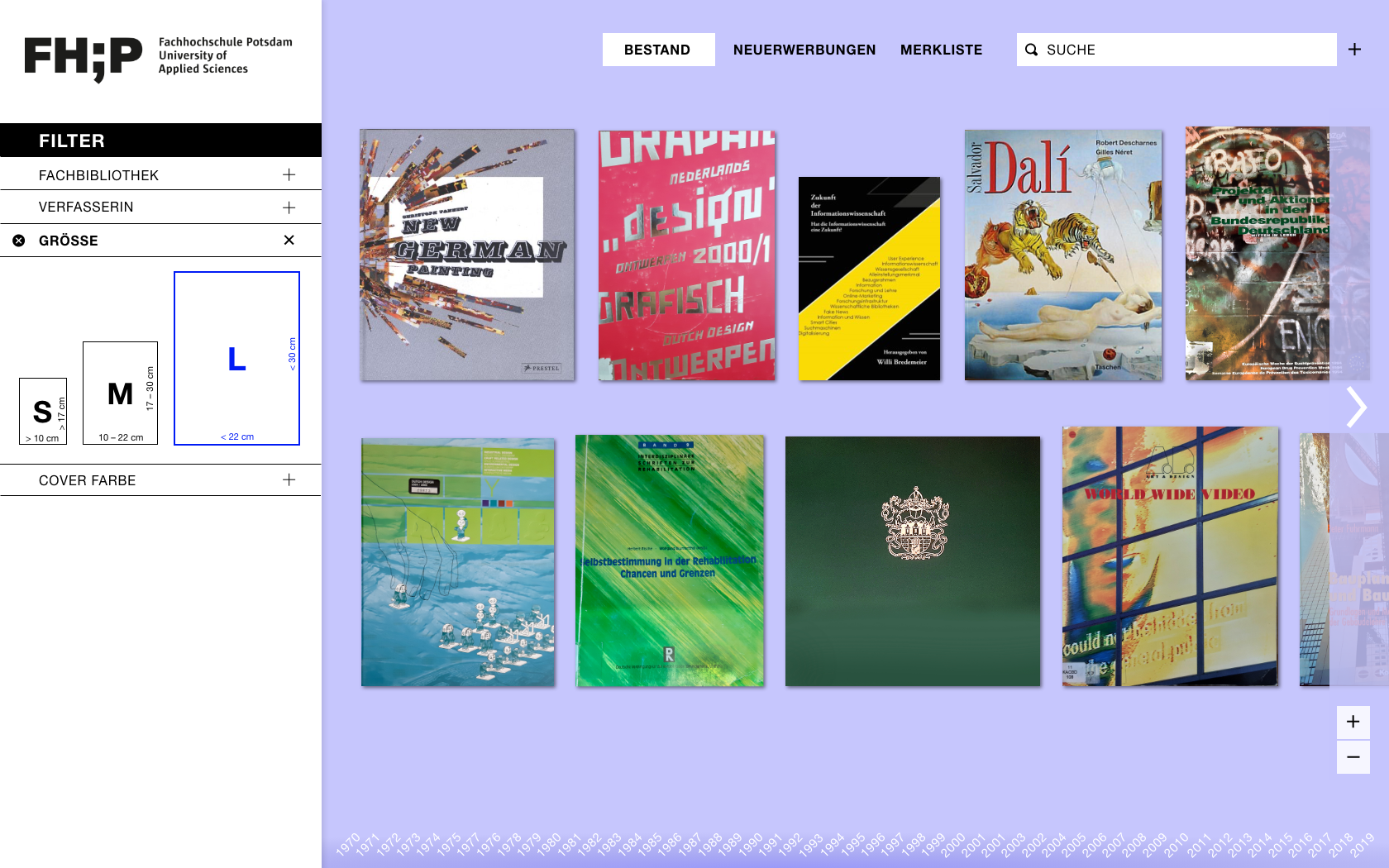
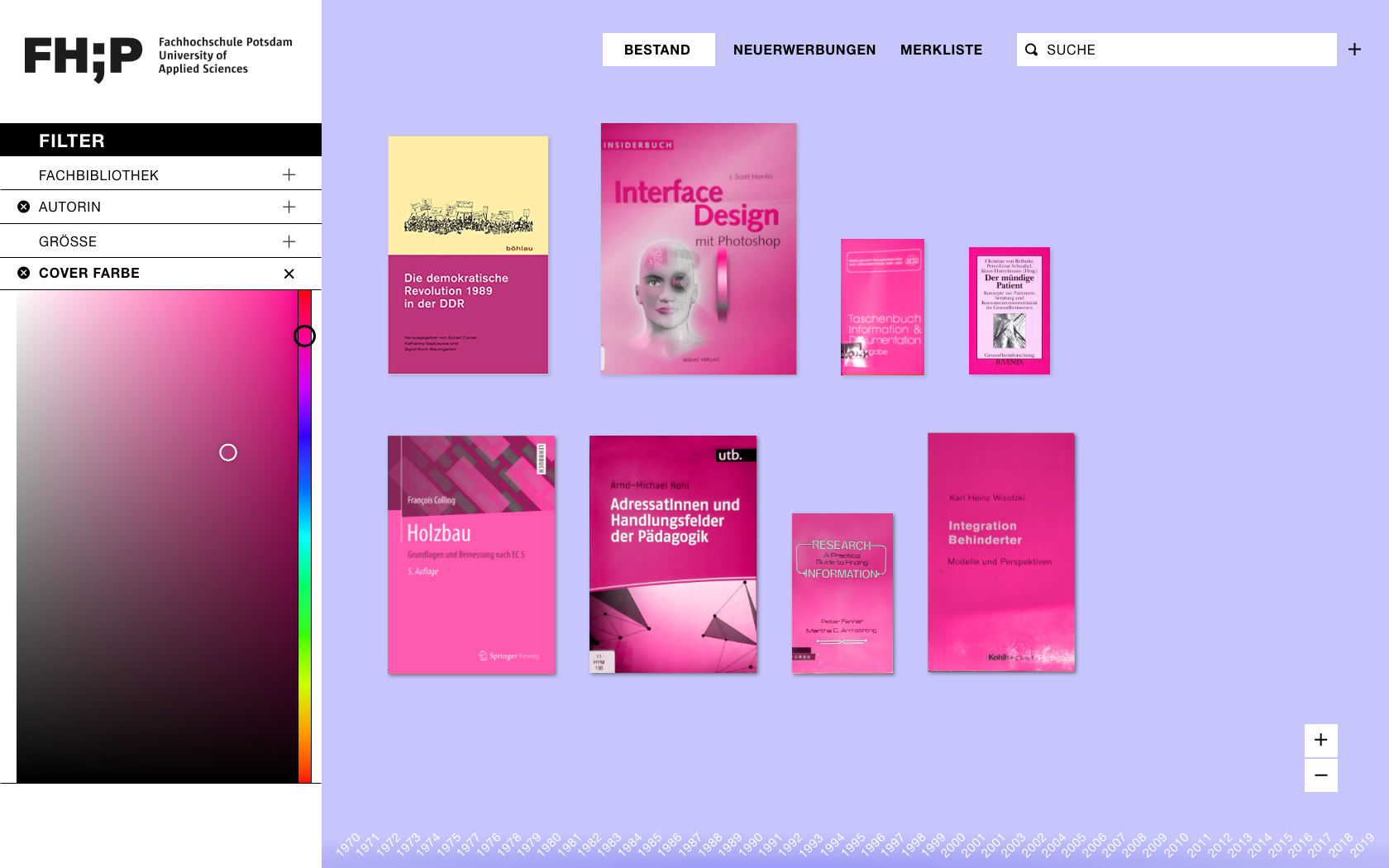
In selecting the facets, various aspects of a book were taken into account. Some of these — such as the color of the cover or the size of the book — can be observed when visiting a physical library. The departmental library facet was chosen to translate the classification system familiar to library patrons into the digital realm.
The following facets have been defined:
Detail view
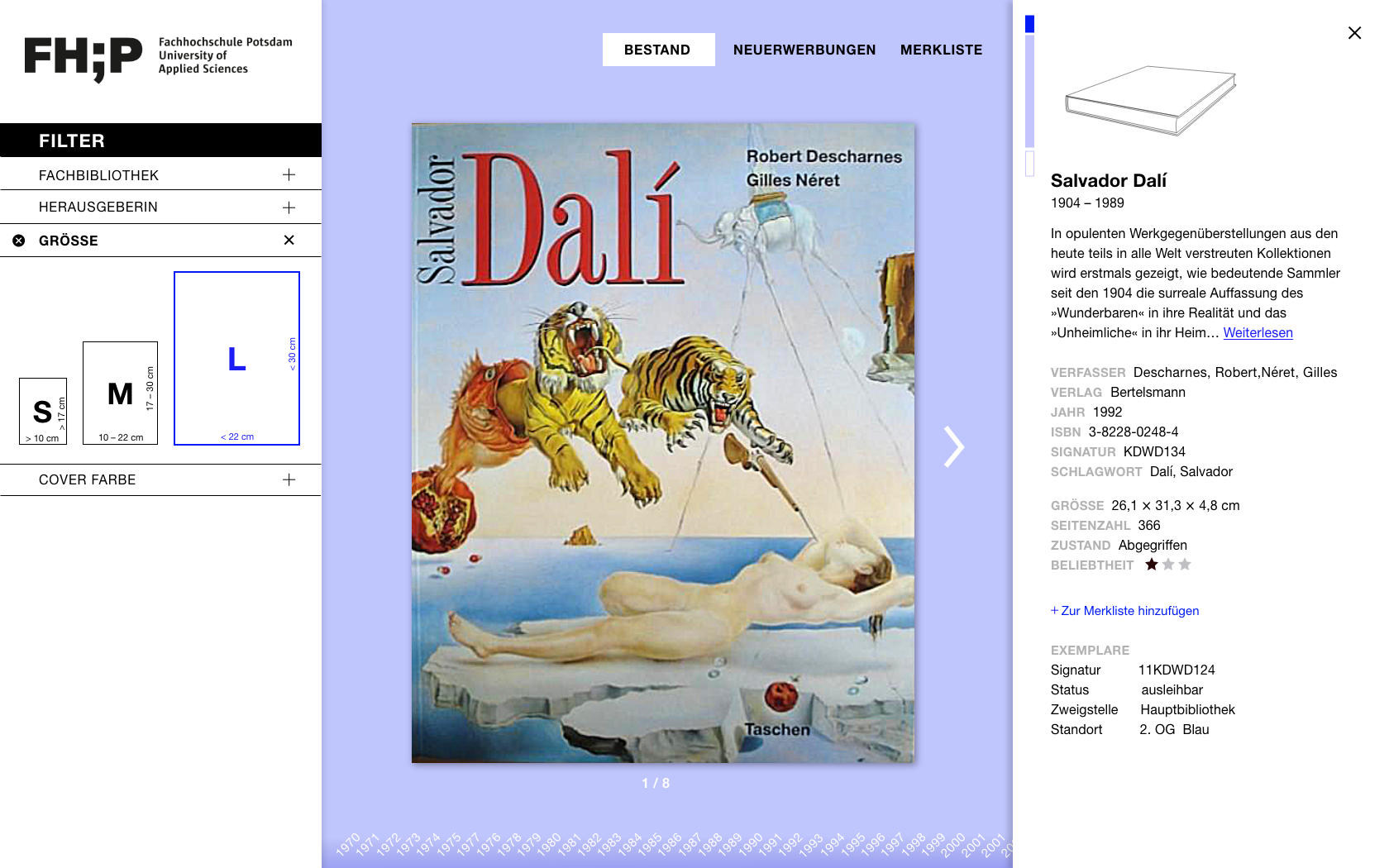
In the detailed view, the book cover is displayed in a larger, high-resolution format. Users can browse through the first few pages of the book, which also allows them to view the table of contents. The sidebar provides comprehensive information about the work, including the title, author, publisher, ISBN, call number, keywords and a brief description.
In addition to these standard details, the view includes further characteristics that may be of interest to those searching for literature, helping them form a thorough impression of the work. For instance, the ratio of text, images, and white space is represented visually by three vertically arranged bars. A scale-accurate, three-dimensional line drawing illustrates the book's precise dimensions (height, width, and depth), making its shape and thickness clear. This is supplemented by textual information regarding the book's physical size and page count.
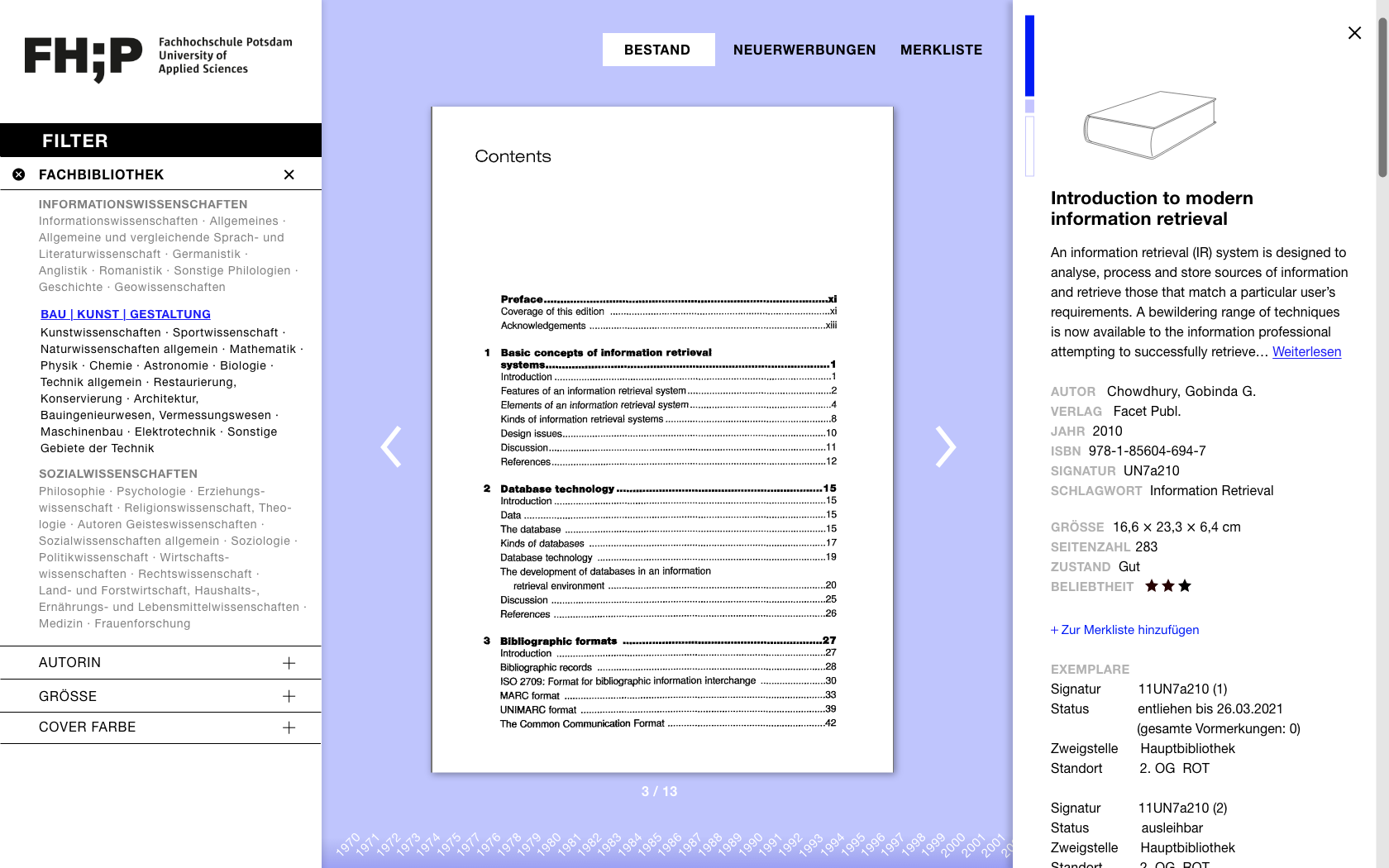
Furthermore, books vary in terms of how frequently they have been borrowed; some are constantly in high demand, while others are borrowed only very rarely. This attribute is presented in the detailed view as "popularity" rated on a scale of up to three stars. The number of stars is determined by the total number of weeks the book has been on loan over the past 12 months.
Another important detail for users is the condition of a book. Many items have only recently been added to the collection, are rarely borrowed, or have been handled with great care; consequently, they show no signs of wear and appear as if new. Others, however, exhibit clear evidence of use — such as discoloration, creases, handwritten notes, markings, or even torn, loose, or missing pages. Individual copies are categorized into one of the following condition levels: "Good", "Worn", "Shows clear signs of use" or "Heavily worn".